A review on Nintendo’s Legend of Zelda Breath of the Wild
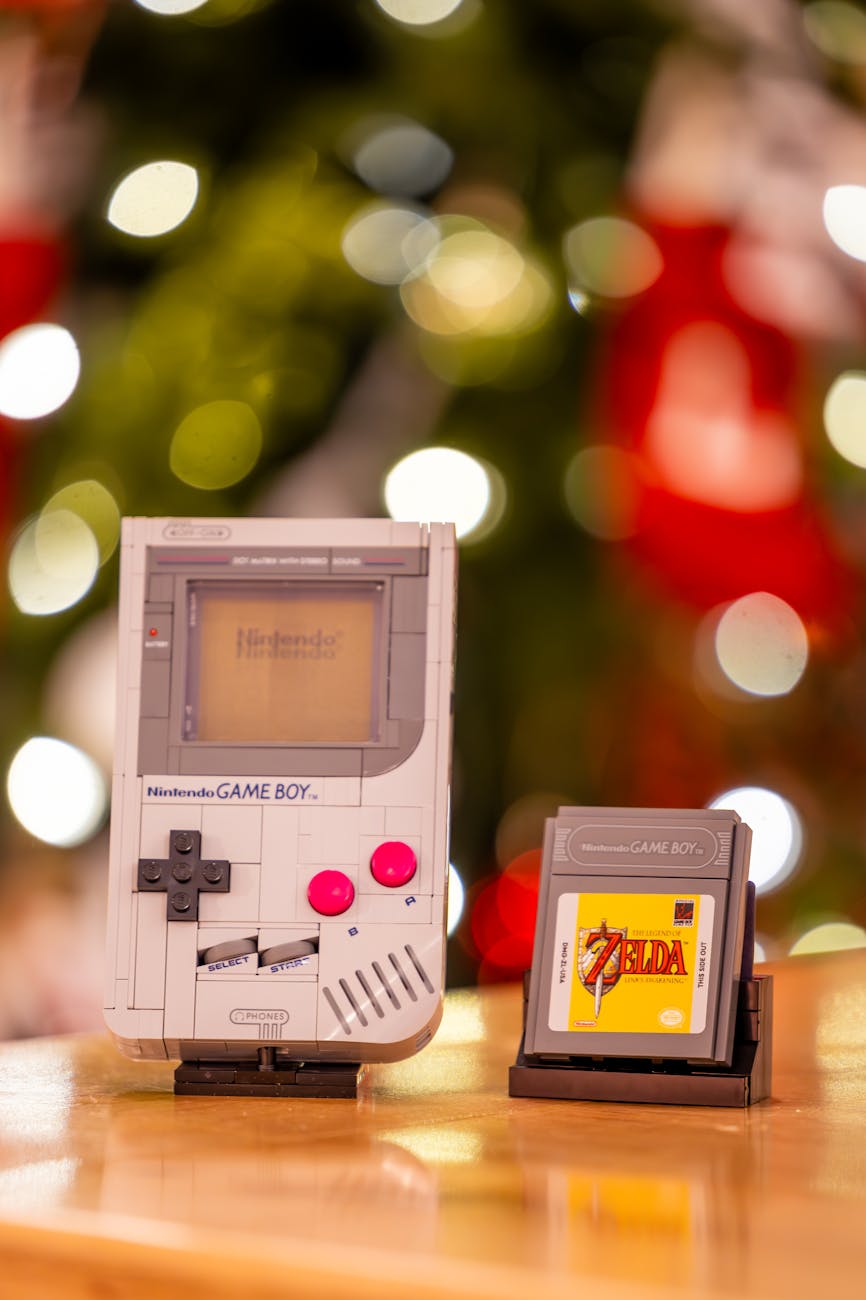
Photo by Caleb Oquendo on <a href="https://www.pexels.com/photo/retro-game-boy-and-zelda-cartridge-with-festive-background-35494269/" rel="nofollow">Pexels.com</a>
The Legend of Zelda: Breath of the Wild (BoTW) was released on March 3, 2017, and marked the launch of the Nintendo Switch console. BoTW revolutionized the Legend of Zelda series and is a title that holds up still in 2026, nearly a decade after its initial launch. This is due largely to decisions revolving around its game design, the art style, and the music.
At its core, BoTW is an action game with role-playing game tropes. It is a game about exploration, discovery, puzzles, and defeating powerful enemies that challenge you to think critically and find clever uses for the tools you’re given.
The player is thrown right into the game upon opening it. As with most Legend of Zelda games, you awaken as the character Link. Only this time, we’re playing in a timeline where Link was defeated in battle and has been hibernating for one hundred years. At the start of the game, you navigate your way out of this chamber.
Once outside, you immediately find that the world has fallen into ruin and disrepair in the hundred years Link has slept. He literally runs up to see Hyrule Castle, the former capitol of Hyrule, abandoned and surrounded by some strange evil aura. There are no other people around except a quiet non-player controlled (NPC) unit sitting around a fire. The world feels desolate and vast from moment one.
In BoTW, you start with nothing. You’re given no direct guidance unless you go looking for it, and this broke the standardized Zelda formula as we knew it. You have to scrounge for weapons, cook meals to heal yourself, and money is scarce. There are puzzles around the world that allow you to slowly build up Link’s stats and upgrade his tool kit. Very little is given to you; the gameplay loop is about exploration and managing weapons and supplies.
BoTW is a game that’s meant to be played over a longer span of time, even though the final objective is given to you from the moment you complete the tutorial. Quests are spread throughout the entirety of the world map, incentivizing exploration and conditioning the player to enjoy journey alongside destination.
The tutorial and its ending is a microcosm of BoTW’s freedom. You’re free to do whatever you want — even to attempt to fight the final boss — undergeared and underprepared — from the moment the tutorial ends.
The gameplay loop is brilliantly designed. It incentivizes the player to always have some kind of goal or task that needs doing, it complements the exploration and the game’s open world perfectly.
Something fascinating I also learned about BoTW, courtesy of Game Maker’s Toolkit on YouTube, was that Nintendo actually struggled at first to capture this vast feeling of freedom and openness that BoTW excels at. In early playtests, there were lots of problems with players feeling like they had to go one direction or another. Most players were going along a linear route to reach their destinations and complete their objectives. It was hard to get them to explore away from the main road.
This was solved by implementing what was dubbed the “triangle rule.” The designers ended up using mountains to constantly impede and block the player’s point of view of various objectives. However, from any point, they made it so there were three points of interest the player could always see.
This effectively made it so the player wasn’t overwhelmed with things to do, and they still had the freedom to do whatever piqued their interest. Whether that be healing, searching for treasure, or restocking on more weapons.
Once the triangle rule was implemented:
“[Nintendo] could see that players freely explored various places,” Game Maker’s Toolkit said. “Following their curiosity from landmark to landmark, but almost all players eventually got to the key locations.”
Something that’s amazing is that because of this triangle rule, no two playthroughs of BoTW are ever truly going to be the same. It’s such a natural, organic experience that half the time you don’t even realize you’ve veered from your main objective. Or in other cases, veered right into one.
The comments of this video also highlight other unique aspects of BoTW’s game design. One of which is the inclusion of the ruined Hyrule Castle in the middle of the map. The game promises to the player that you’re eventually going to reach this landmark, it’s not going anywhere, and you have time to do whatever you want before confronting the final boss.
Something else that the video doesn’t touch on — that a commenter highlighted — is how Nintendo uses other NPCs scattered about the land to subtly point a player towards main objectives.
“One of my favorite memories was when I purposefully avoided going to any of the [main objectives], and instead decided to just wander around,” said YouTube user ineffabletry6528. “Eventually I stumbled upon a bridge, and Sidon popped out and said hi. I thought they were just another NPC for a side quest, and I went to follow them. After arriving at the Zora Kingdom, I realized that I had stumbled upon the main quest completely by accident.”
There were a ton of smart game design decisions Nintendo made in creating BoTW. It was a massive title that was a major selling point for the Nintendo Switch, after the failure of their Wii U console they needed the Nintendo Switch to succeed.
I honestly wish I had more background in game design so I could talk about it in more depth. But from what I know as someone with light knowledge on the subject, the gameplay loop and map design is almost stupidly simple for how effective it is.
Another reason BoTW has aged so well is because of its art style and music. Rather than trying to develop “realistic” graphics that would be outshined by other engines within a decade, Nintendo gave BoTW a unique and immediately recognizable art style.
There’s also a lot of relaxing music in the game that’s helped it age well. The most memorable pieces include gentle piano and guitar themes meant to complement the “empty feeling” of Hyrule since its ruin. The themes are an excellent study or focus tracks, they’re applicable to more than the game itself.
The game also contains iconic boss themes that have all the same melodies, and a ramping feeling of suspense. Each is uniquely adapted to major bosses, but the central melodies and themes are consistent and iconic. Each one feels right for the boss a player is fighting.
The Switch 2 version of Breath of the Wild dropped June 25, 2025. The Switch 2 version includes faster loading times, higher graphics quality, and improved frame rates. The game looks absolutely gorgeous with this upgrade and the art style has been refined even further.
BoTW had been winning awards since before it even released in 2017, and continued to receive awards until a year after its release in Aug. 2018. It’s cemented itself as one of Nintendo’s best games, holds up nearly a decade later — and perhaps most importantly — still lives on in players hearts as an unforgettable adventure.