Nearly 27 years after its release, the Matrix still influences culture
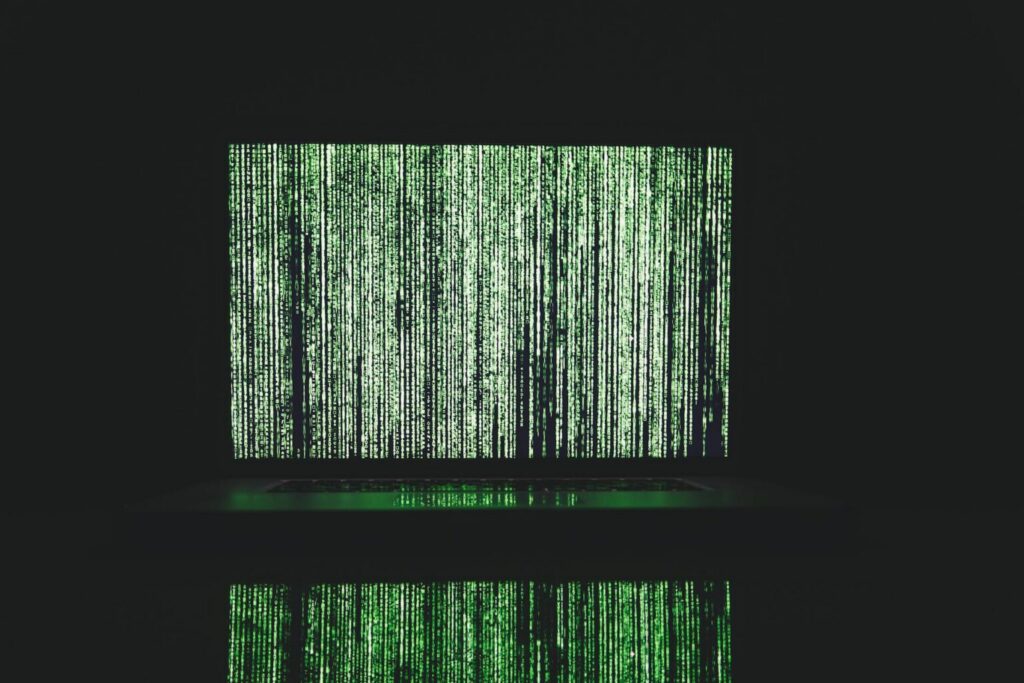
Photo by Markus Spiske on <a href="https://www.pexels.com/photo/green-and-white-line-illustration-225769/" rel="nofollow">Pexels.com</a>
It’s 1999, and the world is changing. Computers are everywhere, and the Matrix movie starring Keanu Reeves was released in theaters, pioneering modern action scenes and special effects, and challenging viewers’ perception of reality. To this day, the Matrix has a grip on pop culture. It’s a movie done right, and its lingo is still prevalent today in many political circles.
Explaining the Matrix doesn’t do it justice. It’s something you just need to go and watch. At it’s core, it’s a movie about humans fighting back against artificial intelligence that’s conquered the world. But the ideas it presents and the questions it asks are so much more than that.
I’ve heard terms like “red-pilled” and “blue-pilled” my entire life and have seen memes of Laurence Fishburne’s “Morpheus.” But it’s just not something you can understand until you see Keanu Reeve’s (Neo’s) mouth meld into a plane of skin, and you see him wake up in a huge hatchery filled with lab-grown humans.
I’m someone who went into this movie with no idea what to expect, and that feeling works in the movie’s favor. Even though there are some things that are “objectively” bad or wrong with it, watching this movie for the first time is a crazy feeling.
I had no idea if everyone was going to die, and what kind of themes and messages the movie would be trying to convey. I sat there in agonizing suspense while I waited for the other shoe to drop with Joe Pantoliano’s “Cypher’s” betrayal. I had no idea if Morpheus was going to die, I expected it since he seemed to be a tropey mentor character.
The Matrix also revolutionized modern action scenes. While I think some of the action nowadays would now be considered “corny” or a little bit over the top, the iconic scenes really hold up. The bullet dodging from both Agent Smith and Neo is just awesome. The hallway scene is still a blast.
From a practical standpoint, this was achieved by using wirework and tons of cameras. It gave the characters the appearance that they were flying or doing crazy stunts, many critics recall that this movie was the first time they’d seen anything like it.
The sound design was also done in a purely digital post production, it was the first time any movie in Hollywood had done this.
The settings in the movie are also gorgeous. The setting’s color palettes — in my unprofessional and untrained opinion — suit the character outfits and designs amazingly well.
There’s a lot of criticism surrounding the movie and its characters, with Hugo Weaving’s “Agent Smith” commonly cited as an exception. A lot of the criticism is valid. The characters at times can feel a bit like cardboard cut outs, or tropey. However, I think people are quick to try and discard tropey characters as if they don’t exist for a reason.
Character tropes work. Morpheus is in particular is awesome. He has aura and looks cool. The “chosen one” hero’s journey plot is something familiar that the movie executes well.
If you try and do something subversive or clever over and over again, you’re just going to wind up writing something completely alien, unfamiliar, and obnoxious to your audience. Look at many of these modern day fantasy projects that refuse to write “classic” heroes. They suck.
In criticising most the characters in the movie, one is frequently over-looked; “Cypher.” About two-thirds of the way through the movie, Cypher betrays the crew living aboard Morpheus’ ship. He sells out his crew and murders his friends because he wants to have his memory wiped and go back to living in the Matrix.
This character doesn’t get enough credit. Cypher terrifying because he could be any one of us. While I’m sure that many of us love to imagine ourselves as freedom-fighter pirates in Morpheus’ crew, the reality is that most of us would probably choose “blue-pilled” lives of ignorance because it’s easier. Because we don’t have to sit there and eat nutrient paste every meal, and can ignore the injustices being committed against our fellow man.
While the character does lean towards being comedically evil while killing his friends, the initial choice and build-up leading into these scenes is good. It’s terrifyingly human, which I’m not sure many critics want to admit. Even if the character work in this movie is basic, it’s still good.
There’s been a problem in modern Hollywood lately concerning “strong women” or “girl boss” characters. There are a variety of derogatory ways this trope and its poor execution has been described, but if you need an example of it, just look at many recent Star Wars and Marvel Cinematic Universe projects. There are many obnoxious women leads who the writers really wanted us to like and think were cool, but they come off as annoying.
The Matrix does a good job of letting characters stand on their own. Titania doesn’t need to trample or scream at Morphus and Neo to come off as badass. And the side characters all have their moments.
This should maybe be the bare minimum in movie production and story telling, but at some point we went away from that. So it’s an underlooked point in the movie’s favor.
Two decades after its release, the Matrix is still present in pop culture.
If you go online or listen to certain political commentators, you might hear terms such as red blue pilled. Before watching this movie, I thought it was just a general sort of denomination for “Republicans” and “Democrats,” given that party colors are red and blue respectively, but I was wrong.
Certain influencers in the current political landscape will refer to themselves as red-pilled if they believe they know what is really going on in our world. It’s a fascinating concept because once Neo has taken the red pill, there is no going back. There is no looking at things the way he used to.
The Matrix is one of the most influential movies that has emerged in the twentieth century. There are currently three sequels and a fourth in the works, none have lived up to the original. It’s grip and influence in pop culture have been undeniable.